Adjusting Journal Entries in Accrual Accounting Types

Finally, it’s called the balance sheet because, at all times, assets must equal liabilities plus equity. There is no doubt that if you interview for an entry-level position in investment banking, equity research, or asset management, you will have to be familiar with the four financial statements. If you do your own accounting, and you use the accrual system of accounting, you’ll need to make your own adjusting entries. To make an adjusting entry, you don’t literally go back and change a journal entry—there’s no eraser or delete key involved. His bill for January is $2,000, but since he won’t be billing until February 1, he will have to make an adjusting entry to accrue the $2,000 in revenue he earned for the month of January.

  • An accrued expense is an expense that has been incurred (goods or services have been consumed) before the cash payment has been made.
  • For instance, you decide to prepay your rent for the year, writing a check for $12,000 to your landlord that covers rent for the entire year.
  • For instance, an accrued expense may be rent that is paid at the end of the month, even though a firm is able to occupy the space at the beginning of the month that has not yet been paid.
  • The depreciation expense shows up on your profit and loss statement each month, showing how much of the truck’s value has been used that month.
  • Hence the income statement for December should report just one month of insurance cost of $400 ($2,400 divided by 6 months) in the account Insurance Expense.

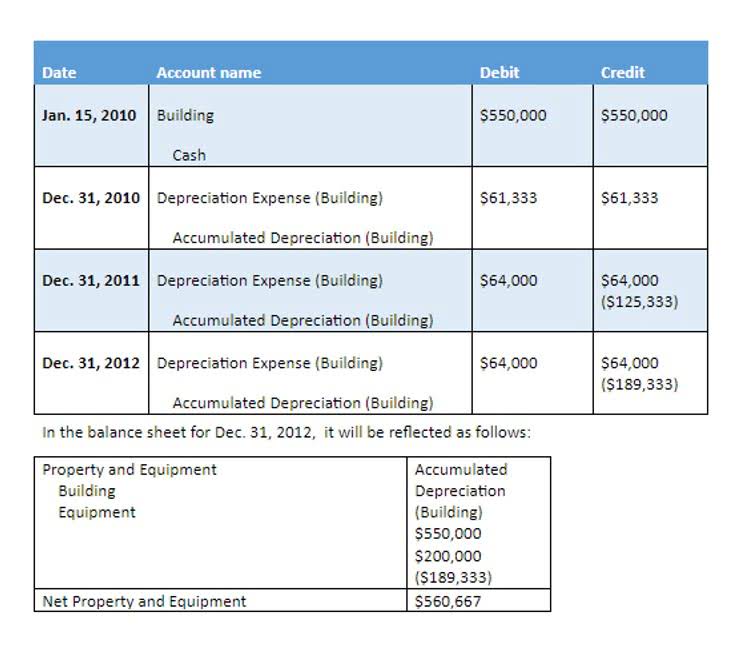
If you do your own bookkeeping using spreadsheets, it’s up to you to handle all the adjusting entries for your books. Then, you’ll need to refer to those adjusting entries while generating your financial statements—or else keep extensive notes, so your accountant knows what’s going on when they generate statements for you. Another very common adjusting entry is the recording of depreciation on fixed assets because depreciation is the process of allocating an asset’s cost to the years of its useful economic life. This journal entry can be recurring, as your depreciation expense will not change for the next 60 months, unless the asset is sold. Common prepaid expenses include rent and professional service payments made to accountants and attorneys, as well as service contracts. An accrued expense is an expense that has been incurred (goods or services have been consumed) before the cash payment has been made.

Your accountant will likely give you adjusting entries to be made on an annual basis, but your bookkeeper might make adjustments monthly. If you have adjusting entries that need to be made to your financial statements before closing your books for the year, does that mean your books aren’t as accurate as you thought? This article will take a close look at adjusting entries for accounting purposes, how they are made, what they affect and how to minimize their impact on your financial statements.

When the company keeps yearly information, the year could be based on a fiscal or calendar year. When the exact value of an item cannot be easily identified, accountants must make estimates, which are also considered adjusting journal entries. Taking into account the estimates for non-cash items, a company can better track all of its revenues and expenses, and the financial statements reflect a more accurate financial picture of the company. Let’s pause here for a moment for an explanation of what happened “behind the scenes” when you made your insurance payment on Dec. 17. When you entered the check into your accounting software, you debited Insurance Expense and credited your checking account.

Accounting Adjustments Explained

The $2,400 transaction was recorded in the accounting records on December 1, but the amount represents six months of coverage and expense. By December 31, one month of the insurance coverage and cost have been used up or expired. Hence the income statement for December should report just one month of insurance cost of $400 ($2,400 divided by 6 months) in the account Insurance Expense. The balance sheet dated December 31 should report the cost of five months of the insurance coverage that has not yet been used up.

An adjusting journal entry involves an income statement account (revenue or expense) along with a balance sheet account (asset or liability). It typically relates to the balance sheet accounts for accumulated depreciation, allowance for doubtful accounts, accrued expenses, accrued income, prepaid expenses, deferred revenue, and unearned revenue. Also, companies, public or private, using US GAAP or IFRS prepare their financial statements using the rules of accrual accounting. It is because of accrual accounting that we have the revenue recognition principle and the expense recognition principle (also known as the matching principle). Another situation requiring an adjusting journal entry arises when an amount has already been recorded in the company’s accounting records, but the amount is for more than the current accounting period. To illustrate let’s assume that on December 1, 2022 the company paid its insurance agent $2,400 for insurance protection during the period of December 1, 2022 through May 31, 2023.

These are recorded by debiting an appropriate asset (such as prepaid rent, prepaid insurance, office supplies, office equipment etc.) and crediting cash account. An adjusting entry is made at the end of accounting period for converting an appropriate portion of the asset into expense. When you record an accrual, deferral, or estimate journal entry, it usually impacts an asset or liability account.

This is posted to the Interest Receivable T-account on the debit side (left side). This is posted to the Interest Revenue T-account on the credit side (right side). In the journal entry, Depreciation Expense–Equipment has a debit of $75. This is posted to the Depreciation income summary account Expense–Equipment T-account on the debit side (left side). This is posted to the Accumulated Depreciation–Equipment T-account on the credit side (right side). The adjusted entry is to debit accounts receivable and credit service revenue (for whatever service price is).

What Does an Adjusting Journal Entry Record?

We post the purchase in this manner because you don’t fully deplete the usefulness of the truck when you purchase it. At the end of the following year, then, your Insurance Expense account on your profit and loss statement will show $1,200, and your Prepaid Expenses account on your balance sheet will be at $0. In order for information to be useful to the user, it must be timely—that is, the user has to get it quickly enough so it is relevant to decision-making. You may recall from Analyzing and Recording Transactions that this is the basis of the time period assumption in accounting. This requires companies to organize their information and break it down into shorter periods. Internal and external users can then rely on the information that is both timely and relevant to decision-making.

Expenses may be understated

In Layman’s terms, we receive cash “up front” and still have yet to deliver our product / perform our service for the customer. You rent a new space for your tote manufacturing business, and decide to pre-pay a year’s worth of rent in December. A computer repair technician is able to save your data, but as of February 29 you have not yet received an invoice for his services. Over 1.8 million professionals use CFI to learn accounting, financial analysis, modeling and more.

Cash/Accrual-basis Accounting and Recognition Principles

As a result, the company will debit prepaid insurance for 600 and credit cash for 600. Now that all of Paul’s AJEs are made in his accounting system, he can record them on the accounting worksheet and prepare an adjusted trial balance. The way you record depreciation on the books depends heavily on which depreciation method you use. Considering the amount of cash and tax liability on the line, it’s smart to consult with your accountant before recording any depreciation on the books. To get started, though, check out our guide to small business depreciation. For the sake of balancing the books, you record that money coming out of revenue.

Who needs to make adjusting entries?

Deferred Revenue (a.k.a. Unearned Revenue) is a liability for companies because cash has been received before a service is performed or a product is delivered. Following our year-end example of Paul’s Guitar Shop, Inc., we can see that his unadjusted trial balance needs to be adjusted for the following events. These adjustments are then made in journals and carried over to the account ledgers and accounting worksheet in the next accounting cycle step. In other words, we are dividing income and expenses into the amounts that were used in the current period and deferring the amounts that are going to be used in future periods. If making adjusting entries is beginning to sound intimidating, don’t worry—there are only five types of adjusting entries, and the differences between them are clear cut.

Even though you’re paid now, you need to make sure the revenue is recorded in the month you perform the service and actually incur the prepaid expenses. Generally, adjusting journal entries are made for accruals and deferrals, as well as estimates. Sometimes, they are also used to correct accounting mistakes or adjust the estimates that were previously made. Adjusting journal entries are used to reconcile transactions that have not yet closed, but which straddle accounting periods.

Farm Accountant Definition, Principles, and Roles

farm bookkeeping

If you’re a traditional farmer who raises crops or livestock, then you have farm income and are treated as being self-employed. You would file taxes using Schedule F, Profit or Loss from Farming. With good accounting software, you can track multiple profit centers from the same bank account. However, tracking income and expenses by hand for multiple profit centers will be easier if you have separate bank accounts for each profit center. Beyond just calculating historical product prices, farm accounting management is capable of much more. Instead of being structured around products, all operations are based on repetitive cost centre “tasks” (planting, spraying, preparing feed, transporting goods, etc.).

Great! The Financial Professional Will Get Back To You Soon.

By reducing expenses and boosting profits, the profit center is essential for carrying out management strategies and achieving profit objectives. Many farmers handle all of their profit centers through the same accounting system. Gain new insight into your operations and improve decision making with built in actionable operations, farm specific financial and compliance reporting. Understand your ROI with integrated farm accounting features that help reduce expenses using cash flow surpluses for investment or to pay down debt and increase profitability and returns. During significant events like selling a farm or planning for inheritance, accurately assessing the farm’s value is crucial. By showcasing the farm’s financial strengths, farm accountants enhance the farm’s chances of securing essential financial support.

Determine how much livestock you would have sold without the weather-related condition. Pull your AG accounting records from past years to show how many animals you’ve sold, how many animals you would have sold without the weather-related conditions, and other proof. Having up-to-date records also helps you better plan for, take advantage of, and record government subsidies for farmers. Accounting software for the farm has replaced systems that previously required human entry and an insane number of spreadsheets. On the other hand, farm managers are now able to oversee several processes at once. Someone on our team will connect you with a financial professional in our network holding the correct designation and expertise.

Through their guidance, farmers are able to grasp the economic implications of various farming approaches, making informed decisions that directly impact the financial health of their farms. FreshBooks farm accounting software works amazingly well on all Apple devices including Apple iPhone’s, iMac’s, MacBook’s, and iPad’s. FreshBooks accounting software is built around ensuring you get paid every penny for your hard work. It’s simple to create and customize an invoice, add your logo and personalize your “thank you” email. With best in class accounting software like FreshBooks, how to estimate burden you can also easily add tracked time and expenses to your invoices so you’ll never leave money on the table again. To help you stay on top of your agricultural accounting responsibilities, you may consider using accounting software to handle your day-to-day recordkeeping and hiring an accountant.

FreshBooks accounting software stays in sync across the desktop and mobile apps so you can work on whatever device you prefer without missing any important information. Make it easy for your clients to pay you quickly and easily—straight from your invoice. With FreshBooks accounting software for farmers your clients can pay you by credit card in just a couple of clicks. The fee structure is straightforward and transparent, so there’s no guessing involved. Plus, accepting payment online is secure and elevates your brand in the ranks of the tech-savvy. With FreshBooks accounting software you’ll know at-a-glance how long tasks really take.

Cash Accounting

This process involves comprehensive financial planning, equitable asset distribution, and, potentially, training for the successors. Farmers, through these systems, can identify trends, anticipate future costs, and assess the effectiveness of their farming practices. We’ve compiled a comprehensive list that highlights farm specific tax write-offs just for you. Every farm is different and we’ve only scratched the surface in this guide. It’s important to record any losses in your accounts, because that will reduce your overall tax bill. You won’t want to be taxed on something that’s been destroyed, or on a profit that you haven’t made.

What are farm business expenses?

Farm accountants lend their expertise in crafting detailed budgets that project future income and expenses. A farm accountant is a professional who specializes in handling the unique financial needs of agricultural businesses. This role requires deep knowledge of accounting principles but with a particular focus on aspects specific to the farming industry. FreshBooks accounting software makes it easy to know exactly how your farming business is performing. With straightforward reports, your success will never be a mystery.

Properly managed agricultural land shouldn’t depreciate – it might even go up in value. But mismanaged land can take many years of careful nurturing to return to productivity, especially if it’s become highly acidic or drained of nutrients due to over-farming in the past. Our suite of features gives you input into your crops and livestock from beginning to end so you can report on how your season was and have a year over year history to look at.

  1. At the same time, they devise cash flow management strategies to ensure the farm can meet its financial obligations while maintaining financial resilience in unexpected circumstances.
  2. The core principles of farm accounting include accurate bookkeeping of all farming transactions and understanding depreciation and amortization of assets.
  3. So whatever it costs to keep your land in good condition it is likely to be money well spent.

One year you might find there’s a big subsidy on cheese production, what does the company’s asset turnover ratio mean another year it might be beef that’s subsidized. Quite often governments get it wrong, leading to surpluses that drive down prices too far. The so-called “butter mountains” and “wine lakes” in Europe towards the end of last century were partly a result of poorly-managed subsidies.

farm bookkeeping

Key Farm Accounting & Bookkeeping Tips

That way, you can potentially lower your tax liability if your income is high one year and low in another. You do not have a farming business if you 1) contract the harvesting of a commodity from someone else or 2) buy or resell plants or animals from someone else. Sign up to receive more well-researched small business articles and topics in your inbox, personalized for you. Track and improve soil and livestock health and traceability with integrated  tools that support regenerative and bio-diverse agriculture. Collaborate with your team to organize and streamline farm activities and track everything from anywhere. Ask a question about your financial situation providing as much detail as possible.

10 Best Multi-Entity Accounting Software 2024

multi entity reporting

Adequate data migration is paramount in maintaining financial record integrity and ensuring a seamless transition. Determine what every concerned entity needs to have and, for each, draw out a plan. The plan will bring out the gaps or areas for improvement that need to be attended to to smoothly transition into MEA. Transfer pricing is a key consideration, governing intercompany transactions and requiring adherence to the arm’s length principle.

multi entity reporting

Diverse Systems

  • This process, known as currency translation, is essential for creating accurate consolidated financial reports and presents ongoing challenges in multi-entity reporting.
  • This standardization ensures that financial statements are prepared on a comparable basis, enhancing the reliability of consolidated financial information for stakeholders.
  • Just make sure not to sign up for the QuickBooks ProAdvisor revenue share program, as the bounty is only awarded to firms that are enrolled and approved in this program.
  • By identifying and leveraging credits, such as those for research and development or energy efficiency, companies can reduce their tax burden.
  • Spend less time consolidating your financial data with automated P&L, Balance Sheet, Trial Balance and more.
  • Keeping up-to-date with these sorts of regulatory changes will let you minimize the risks and guarantee confirmation of your financial practices to the law properly.

The CFO will then have to spend time compiling all of the financial data of multiple subsidiaries into one document to present to the rest of the C-suite. For the sake of CFOs everywhere, let’s break down exactly what multi-entity accounting is, why it’s so challenging and how multi-entity accounting software can make things that little bit simpler. To solve these problems, we built SoftLedger, which is a general ledger accounting software designed specifically for multi-entity organizations. If your subsidiaries deal with multiple currencies, you’ll have to calculate the exchange rates and consolidate those currencies before you can produce a consolidated financial statement.

Multi-Entity Accounting: Spend Management Across Entities

These trailblazing tools offer users the ability to consolidate bookkeeping data from different entities and help identify trends, anomalies, and opportunities for growth. Consolidated reports also allow organizations to effectively allocate their resources by understanding the financial needs and contributions made by each entity. This data allows leaders to ensure that their resources are directed towards the most profitable and strategically important or promising areas.

multi entity reporting

Accounting For Multiple Entities: An Efficient Step-by-Step Process

When you have to make difficult decisions on whether to take a leap or play it safe, you’ll make better choices when you have a clear real-time picture of your finances. This makes it difficult for CFOs and CEOs to have an up-to-date understanding of their business and make strategic decisions about the future. You can see why the needs of a theme park’s accounting and a film studio’s accounting might be very different. You can also drill down to any specific entity and always access an accurate audit trail. Multi-entity accounting is changing, and here are some trends that will leave a mark in 2024. Several CPA and accounting firms have implemented MEA, drastically improving their accounting process.

multi entity reporting

“Before MEM, whenever we had to do backups or version upgrades, we had to do it 150 times. It was a painful process.”

If we open up any offices in the future, this is a system that we’ve got in place that allows us to do that, because it’s super simple to add another entity into the system, and then we’re up and running straight away. With Tipalti’s Multi-FX product, your company won’t need to set up a network of regional international banks to make payments through foreign bank accounts. Automated Invoice processing includes error detection, 3-way matching with purchase orders and receivers, guided approvals, fraud risk reduction, and checking for global regulatory compliance when making payments. Use AI to help accurately import an existing project-specific budget from a spreadsheet to Intuit Enterprise Suite.

  • If there is anyone out there who feels they’ve syncronized sub-companies successfully, sharing the apps and methods would be very helpful.
  • Embracing new age tools will not only ensure that organizations stay ahead of the competitive curve, but also make data backed decisions that propel them towards a prosperous future.
  • Consolidate data, drill into detail, and deliver real-time reports — all with unlimited reports and users.
  • Adherence to Organisation for Economic Co-operation and Development (OECD) guidelines and local tax regulations is essential to avoid penalties.
  • A multinational SaaS company with subsidiaries in the US, UK, and India faced challenges in managing funding allocations and tax compliance.

multi entity reporting

Gathering data from different corners of the organisation, especially with continuously changing numbers, turns this task into a challenging and time-consuming process. There are a few reasons why a business with multiple related entities might operate this way. For example, Entity X might pay a bill on behalf of Entity Y if Entity Y doesn’t have its own bank account, or perhaps the bill was posted in Entity X’s currency so it makes sense that they would pay it. Intercompany loan accounts reflect monetary balances between related entities in a group. Navigating intercompany recharges manually in Xero can be incredibly time-consuming, but with Mayday, recharge automation is possible. This is how you will manage your multi-entity business within Xero; by switching between Xero organisations and managing each entity separately.

  • Then you’d head into Xero to manually raise invoices and bills, or journals, between the entities.
  • More core features include multi-currency conversions to flexible reporting by period, company and category.
  • Managing a multi-entity business means handling complex multi-entity accounting processes and challenges.
  • Consolidated financial statements are a crucial tool for multi-entity organizations to present a comprehensive view of their financial position and performance.
  • Ensure regular reviews of processes in accounts and update them wherever necessary.

For example, a manufacturing firm with subsidiaries in multiple countries can streamline its intercompany transfers while ensuring compliance with local tax codes. Blockchain technology enhances security and transparency for intercompany transactions. It provides an unchangeable, secure, transparent ledger of all transactions that ensures financial data is accurate and tamper-proof. A leading CPA firm, A implemented MEA to handle the books of its various multi-legal entity clients. As a result, the firm’s clients have more accurate and timely financial reports, enhancing their capability to make better business decisions.

multi entity reporting

One of the biggest challenges lies in streamlining management to ensure accurate financial reporting across multiple entities, locations, offices, or profit/cost centers. Multi-entity accounting software ensures that financial information is Cash Flow Management for Small Businesses updated in real time, providing executives and managers with the timely insights needed to make informed decisions. Using powerful tools, organizations can simplify and enhance the process of consolidated reporting, gaining access to advanced analytics, automated data integration and visualization capabilities. Through this, organizations can streamline their financial reporting processes, gain deeper insights into their financial performance, and drive growth and success in a competitive business environment. Financial consolidation software pulls in data from various business units and entities, consolidating financial reports into a unified view. When using these tools, CFOs can more accurately track financial performance and avoid the inconsistencies that manual processes often introduce.

Intuit Enterprise Suite delivers automated and streamlined finances for valuable insights to help scale multi-entity businesses. The first step towards mastering multi-entity financial management involves strengthening account structures. Misaligned or overlapped GL codes can lead to what is multi entity accounting divergent accounts, jeopardizing the integrity of balance sheets and the coherence of financial statements.

Bookkeeper Job Description, Skills, Experience and Education

what is bookkeeping experience

Being proactive in seeking professional development allows you to be more competent in performing your role or taking on more organizational responsibilities. Gaining accounting skills allows you to fast-track your career progression and access more opportunities for upward mobility. Since bookkeeping is a more straightforward process than accounting, it is something that many people can (and do) opt to take care of themselves. As your business grows and you begin making higher profits, hiring staff and handling more transactions, however, it may make sense to outsource the details of bookkeeping to someone else. When first starting out, market yourself as a professional who is well-versed in managing accounts, reconciling transactions, providing financial overviews and balancing budgets. Ask for testimonials from people who have utilized your services in the past and spread the word about your offerings through a website or social media.

A few employers offer on-the-job training for bookkeepers by providing internships and placement programs. According to the US Bureau of Labor Statistics (BLS), most bookkeepers can learn the profession’s basics in about six months [3]. Once you become a qualified bookkeeper, you can work as a permanent employee or freelancer. Integrity and trustworthiness are important qualities to cultivate as a bookkeeper.

The Support to Grow your Tax and Bookkeeping Career, Your Way

Bookkeeping may also include the creation of financial statements and processing payroll. If you find that you have a talent for and enjoy the process, you may consider http://avialine.com/hotel_photo_slideshow.php?HotelId=5894 starting your own bookkeeping business providing this service to others. There’s always a demand for experienced, efficient bookkeepers in nearly every industry.

  • Accountants in private and public practice will need technical competencies to provide valuable insights from computer-generated results.
  • However, more knowledge is always an asset, and a bookkeeping certificate can make your resume look more attractive, potentially helping you to gain clients.
  • When first starting out, market yourself as a professional who is well-versed in managing accounts, reconciling transactions, providing financial overviews and balancing budgets.
  • Their work plays an important role in the operation of a successful business, which can have very many transactions in a single day, let alone a week, month, fiscal quarter, or year.
  • According to 81 percent of CBs who interviewed for a new job after becoming certified, having a certification contributed to getting the interview [4].
  • If you’re interested in an analytical, business-minded career, becoming a bookkeeper (especially a virtual bookkeeper) might be the right choice.

There are a lot of cheap bookkeeping courses online and a lot of free content too. You can find bookkeeping courses on standard bookkeeping work tools like bookkeeping software and financial reports. Single-entry bookkeeping is a straightforward method where one entry is made for each transaction in your books. These transactions are usually maintained in a cash book to track http://putc.org/pochemu-patriarx-prizyvaet-vkladyvatsya-v-kriptu/ incoming revenue and outgoing expenses. The single-entry method will suit small private companies and sole proprietorships that do not buy or sell on credit, own little to no physical assets, and hold small amounts of inventory. Modern accounting software is the repository of all financial transactions for your company and can generate requisite reports in real-time.

History of bookkeeping

Double-entry bookkeeping records all transactions twice, usually a debit and a credit entry. Typically, double-entry bookkeeping uses accrual accounting for liabilities, equities, assets, expenses and revenue. There are many opportunities to work in a salaried position from home to gain on-the-job training. The Intuit Tax and Bookkeeping Talent Community is a great place to find remote bookkeeping jobs and access training material.

  • According to the US Bureau of Labor Statistics (BLS), most bookkeepers can learn the profession’s basics in about six months [3].
  • Bookkeepers regularly summarise this activity into reports that show how the business is doing.
  • For example, you might complete the Intuit Bookkeeping Professional Certificate or several other bookkeeping courses offered by universities and companies on Coursera.
  • Ask for testimonials from people who have utilized your services in the past and spread the word about your offerings through a website or social media.

It specifies the date of each transaction, the accounts credited or debited, and the amount involved. While the journal is not usually checked for balance at the end of the fiscal year, each journal entry affects the ledger. As we’ll learn, it is imperative that the ledger is balanced, so keeping an accurate journal is a good habit to keep.

What skills do you need to become a bookkeeper?

Accountants help businesses understand the bigger picture of their financial situation. A client’s financial activities will include all transactions related to their income and expenses and a bookkeeper is responsible for recording all of these transactions accurately. Some bookkeepers may also have to facilitate financial transactions and ensure  transactions are legally compliant. One way to think about it is that bookkeepers lay the groundwork for accountants to analyze and prepare financial statements. There are high stakes when managing a business’s financial statements, which can lead to stress.

what is bookkeeping experience

Learn more about what bookkeepers do and how to get started in this career. You may be able to learn useful skills from volunteering to help organise a small charity’s finances. You should consult your own professional advisors for advice directly relating to your business or before taking action in http://www.canadiensstore.com/welcome-to-reed-enterprise-data.html relation to any of the content provided. Most often, their reports go to business owners and managers to help them make decisions. Some bookkeepers, however, are actually involved in strategy development. Becoming a certified bookkeeper enhances your credibility and increases your earning potential.

Time Tracking for PTO and Vacation Accrual

Factors that impact PTO accrual include state laws, company policies, and union contracts. Or, you may want to set your accrual rate to match what full-time employees receive, which will end up being less, as they work fewer hours. When you are dealing with unused vacation time, the journal entries are made in two accounts; the vacation payable account and the vacation expense account. In this situation, credit the payable account and debit the expense account.

  • Ask the employees taking PTO to make sure any work is covered and by whom.
  • But the caveat is that these part-timers must work full 8-hour shifts.
  • Vacation accrual, as mentioned, simply refers to the amount of accrued vacation pay that has yet to be paid by the employer.

PTO rates per hour or period are calculated differently per employer. In other words, it means the outstanding value of vacation hours set by the employer based on current pay per employee. Understanding what paid time off, vacation pay, accrual leave, how these payments are calculated, how they impact a company and accrued vacation meaning are all crucial pieces of knowledge. Suppose John Smith wants to use 50 hours of vacation time at the beginning of the next fiscal year. Before you calculate PTO, you must decide how many hours you want your employee to accrue per year (based on a full-time schedule) – maybe it’s 40, 80, or some other number. In the sections below, we’ll figure out the number of time employees should earn at each pay period.

A weekly accrual period works best for hourly, part-time, or contract employees who work in weekly increments. Daily PTO accrual means that employees earn paid time off in increments for each day that they work. A daily accrual period makes sense for employees that work a fixed amount of hours per day, or who work full days on part-time or irregular schedules. It’s best practice to track your sick leave accruals and balances separately from PTO available for vacation and other personal reasons. That’s because in some states, sick leave must be paid out upon termination, while PTO doesn’t have to be. Additionally, Vacation pay is a percentage of the eligible wages earned by an employee during each year of employment.

You don’t need a PTO accrual calculator, but you do need to know the process. Now, the very first thing you must comprehend about this mystical accrual process is that it’s not as straightforward as you might imagine. So, grab your calculators and brace yourselves, for we are about to embark on a whimsical journey into the world of factors affecting accrued vacation.

Adjusting Vacation Accrual Made Easy

The need for recording accrued vacations gave birth to a vacation accrual journal. This article outlines a step-by-step method of calculating and recording accrued vacation. The Bureau of Labor Statistics states that most American workers’ standard paid vacation days is 10 days per year. However, the employee’s years of service to a company or their position within the company generally determine their number of paid vacation days. The longer employees work for a company, the more paid vacation days they may get per year. Next, subtract the number of hours the employee used from what they earned (50 – 10).

  • Accrued time off is time off an employee has earned but not yet used.
  • Evaluate your vacation accrual methods at least once per year to ensure accuracy, and account for any changes in pay rates or unused vacation time.
  • And when an employee leaves your business, you may need to pay out accrued time off and include it in their final pay.
  • The hourly accrual rate is the best to use for accuracy, but some businesses prefer to use a simpler calculation based on the fact that biweekly pay results in 26 payroll cycles per year.

Knowing how to adjust vacation accrual is critical; even though US workers want the option of paid time off (PTO), many don’t use up their vacation days. Check with your local HR source or labor board to determine if there’s a payout rate requirement before calculating your employee’s payout amount. To figure an employee’s accrued time based on a daily rate, you will divide the number of hours to accrue per year by the number of working days in a year, so 5 days x 52 weeks.

Business Math: How to Calculate Pay Raise by Percentage

In fact, if you grant PTO as a lump sum at the start of the year, you wouldn’t need to manage accruals at all. On the calendar, fiscal, or anniversary date, employees would receive their lump sum balance to use throughout the year. You would then merely subtract hours for each day they take off until their PTO or vacation time is used up. You then have to determine how many weeks per year your business operates so that you can calculate how many work hours per year employees are eligible to accrue PTO annually. This “hours per year” number is used as the denominator when calculating your PTO accrual rate.

Step-by-Step Guide: Calculating Accrued Vacation for Employees

Accruing time by hours worked is a special accrual rate that does not guarantee a certain number of hours to accrue per year. This is a great rate for part-time employees who work variable schedules and it is also used to fulfill sick time requirements. No matter which accrual rate you choose, your employees will get a certain number of hours to use per year. The accrual rates vary in the frequency at which employees earn their time. Another factor to consider when managing PTO accruals is whether or not you’ll allow your workers to have a negative PTO balance.

To get our accrual multiplier, we’ll divide 80 (hours in two weeks of work) by 2000 (hours worked in the year) to obtain .04. So for every hour our employees work they should earn .04 hours of PTO. Instead of manually calculating PTO balances, use software to automate the process. There are numerous economic choices available, whether you pick time and attendance https://quick-bookkeeping.net/ software with accruals or a full-service HR/Payroll software. In this situation, the numerator (paid time off hours) is 80, while the denominator is 1,960, yielding a more realistic PTO accrual rate of 0.04 hours per hour worked. If you provide your workers two weeks of vacation and PTO each year, it equates to 80 hours per year (in this case).

It doesn’t matter what their actual work hours are each week, as the accrual rate will accurately determine how much PTO they’ve earned that pay period. While a 40-hour workweek is pretty standard, not every company has employees who work 40 hours per week. Some companies consider employees who work as few as 25 hours per week to be full-time and grant https://kelleysbookkeeping.com/ them PTO and vacation. If you use our calculator above, you can input your business’s actual workweek hours to get a more accurate accrual rate before you process your payroll. When you pay employees for vacation hours, you are reducing the cash available to the business. This decrease in cash is recorded as a credit entry in the cash account.

Vacation pay and payout for current employees

Accrued hours by pay balance, aka by dollars instead of hours, is calculated each pay period based on a percentage of an employee’s vacationable earnings. This is the simplest method of payment, and it is most notable for seasonal work, part-time, or casual workers. When pay periods vary in terms of earnings, it’s harder to calculate on an annual term. Now, you have the accrued vacation days and the payments of the employees of your company. Imagine an employee who earns $30 an hour is left with 20 hours of unused vacation time on December 1, 2023.

Calculating vacation time and pay is a necessary part of managing a team. In this article, we break down everything you need to know about vacation accrual and pay—how to calculate it, what to consider, and ways to track it. The accrued vacation balance will eventually turn positive https://bookkeeping-reviews.com/ as vacation hours continue to accrue. Now that you know the calculations required for recording accrued vacation journal entries, let’s use the same examples to see what journal entries to pass. Of course, there are cases where you won’t have to pay for accrued vacation.

Gather Employee Information

The criteria for vacation accruals are spelled out by the Financial Accounting Standard Boards (FASB). Accrued vacation may not be required for your organization based on the FASB criteria. Accrued vacation is the monetary equivalent of employee unused vacation time. The monetary value of an accrued vacation is mostly determined by the company’s vacation policy that is operational at each point. It falls within the jurisdiction of an employee to decide on how unused vacation will be treated in the books. It is therefore important that these accrued vacation days are properly recorded.

accounting technician Calgary, AB Job posting

what is a posting in accounting

The Human Resources Contact is available to answer questions regarding the application process. The Hiring Unit Contact is available to answer questions regarding the position. This position provides hybrid telework opportunities, with employees required to work in-person at least two days per week. You have the following transactions the last few days of April.

  • In the last column of the Cash ledger account is the running balance.
  • The recording of such transactions in the books of accounts is known as adjusting entries.
  • Rob Cohen and Fuad Rana, a Partner and Counsel at Davis Polk, respectively, also contributed to this post.
  • In the journal entry, Accounts Receivable has a debit of $5,500.
  • This is placed on the debit side of the Salaries Expense T-account.

Classification of Accounts

what is a posting in accounting

The decision will be a useful precedent for companies defending good-faith disclosure judgments in the aftermath of cyber incidents. This case also reminds us of the age-old mantra “say what you do and do what you say” that cannot be underestimated. With an easy query, publicly facing statements are easy to access, review and critique therefore ensuring (yes ensuring) that these statements directly and accurately align to a company’s processes and controls. Next steps for security teams should include an exercise in reviewing all external security statements to confirm their accuracy. Under the general direction of the Staff Services Manager III, this position functions as the manager over the Accounting Office.

what is a posting in accounting

Income Statement

At the end of a period, the T-account balances are transferred to the ledger where the data can be used to create accounting reports. From the perspective of closing the books, posting is one of the key procedural steps required before financial statements can be created. In this process, all adjusting entries to the various subledgers and general journal must be made, after which their contents are posted to the general ledger. It is customary at this point to set a lock-out flag in the accounting software, so that no additional changes to the subledgers and journals can be made for the accounting period being closed.

what is a posting in accounting

Other job posting options

what is a posting in accounting

At Finance Strategists, we partner with financial experts to ensure the accuracy of our financial content. Finance Strategists has an advertising relationship with some of the companies included on this website. We may earn a commission when you click on a link or make a purchase through the links on our site. All of our content is based on objective analysis, and the opinions are our own.

What is Credit Cards? Types, Advantages, Disadvantages, Features

As you can imagine, this would be a full time job trying to post every entry manually. Modern computerized accounting systems perform the posting process automatically as soon as an entry is made in the journal. When we studied about real accounts, you understood that there are some accounts that do not vanish after the accounting period ends. The balances of assets and liabilities are carried forward to the next accounting year. A posting is normally carried out following the preparation of a journal entry from the underlying transaction information, and is step three in the accounting cycle.

Step 1 of 3

We follow strict ethical journalism practices, which includes presenting unbiased information and citing reliable, attributed resources. Finance Strategists is a leading financial education organization that connects people with financial professionals, priding itself on providing accurate and reliable financial information to millions of readers each year. They regularly contribute to top tier financial publications, such as The Wall Street Journal, U.S. News & World Report, Reuters, Morning Star, Yahoo Finance, Bloomberg, Marketwatch, Investopedia, TheStreet.com, Motley Fool, CNBC, and many others.

  • On this transaction, Accounts Receivable has a debit of $1,200.
  • It follows that the sum of debits and the sum of the credits must be equal in value.
  • The impossible task of balancing a cyber security program with evolving security risks, a need for speed to market, talent challenges, supply chain management and rapidly changing regulatory environment (just to name a few) is a daunting task.
  • A general ledger contains accounts that are broad in nature such as Cash, Accounts Receivable, Supplies, and so on.
  • You need to know about revenue recognition (when a company can record sales revenue), the matching principle (matching expenses to revenues), and the accrual principle.
  • Remote work is a management option and not an employee entitlement or right.

We have the experience, knowledge, and flexibility to design service offerings and create system enhancements tailored to our customers’ needs throughout the 13 states in which we operate. As an organization focused on sustainability, we are committed to protecting the environment while what is a posting in accounting delivering this energy source. This commitment is made to our customers, employees, and the communities in which we operate. We incorporate environmental stewardship, safety, and compliance into our day-to-day operations and seek to strengthen and support the communities we serve.

Create a Free Account and Ask Any Financial Question

What is the approximate value of your cash savings and other investments?

What Is Accounting? The Basics Of Accounting

what is business accounting

Accounting helps small business owners gauge the health and value of the company, to make better decisions about short- and long-term success. More detailed definitions can be found in accounting textbooks or from an accounting professional. These four largest accounting firms conduct audit, consulting, tax advisory, and other services. These firms, along with many other smaller firms, comprise the public accounting realm that generally advises financial and tax accounting.

By forecasting the cash you’ll need in the next few weeks and months, you’ll be able to set aside enough cash to pay the bills, your suppliers, and your staff. Keep track of all business transactions – even credit card purchases. It’s always better to have more information than what is business accounting you need for your accountant. These are accounts related to a company’s expenses, losses, income or gains. Nominal accounts are considered to be temporary, they are reflected on a company’s income statement as net profit or loss, and are closed at the end of every fiscal year.

Forensic accounting

You can record your financial transactions in a paper ledger or Excel spreadsheet, but using free accounting software saves a lot of time and helps avoid errors. Small business accounting involves the process of tracking, recording and analyzing the financial transactions of your business. It translates numbers into a comprehensible statement about the profitability of your business. Managerial accounting uses much of the same data as financial accounting, but it organizes and utilizes information in different ways. Namely, in managerial accounting, an accountant generates monthly or quarterly reports that a business’s management team can use to make decisions about how the business operates. Managerial accounting also encompasses many other facets of accounting, including budgeting, forecasting, and various financial analysis tools.

It’s the perfect report to review to make sure you have the cash available to tend to your debts and plan future payments. Small business accounting software makes tracking and reporting on your financial information simple and easy. Reconciling your balance sheet accounting helps ensure you have accurate bookkeeping and didn’t miss tracking income or expenses.

Characteristics of Accounting

For example, when goods are purchased for cash, there is a movement of goods from the seller to the buyer and a movement of cash from buyer to the seller. Transactions may be external (between a business entity and a second party, e.g., goods sold on credit to Hari or internal (do not involve a second party, e.g., depreciation charged on the machinery). Generally, a businessman has to pay corporate tax, VAT and excise duty, etc. Therefore, it is necessary that proper accounts should be maintained to compute the tax liability of the business. Accounting is very useful in the determination of the profit and loss of a business and showing the financial position of the business. Accounting is used to communicate financial information in respect of net profits (or loss), assets, liabilities etc., to the interested parties.

  • Illinois now requires employers to provide workers with five days of paid time off for any reason.
  • In fact, the larger the business, the more of a necessity it becomes.
  • For example, they might recommend an online payroll service to cut overhead costs.
  • The system recognizes the fact that every transaction has two aspects and records both aspects of each and every transaction.
  • Moreover, keeping accurate records helps ensure your business is prepared to file taxes, present information to investors or even apply for a loan.
  • We provide third-party links as a convenience and for informational purposes only.

Finally, even the software vendors themselves are telling the world that their AI offerings aren’t really there yet. So AI really has a ways to go before it’s figuring out accounting problems. Therefore, all transactions are events but all events are not transactions. A transaction is a complete action, to an expected or possible future action. In every transaction, there is a movement of value from one source to another. He’s a co-founder of Best Writing, an all-in-one platform connecting writers with businesses.

Accounting definition

It’s most commonly done by financial accountants to ensure that the company’s financial statements comply with the Generally Accepted Accounting Principles (GAAP) standards. Tax accountants might audit your business if the IRS notices tax incongruences, or forensic accountants if law enforcement agencies suspect financial wrongdoing. Managerial accountants, also known as management accountants, collect financial data, analyze it, compile it into reports and then present it to the company’s management.

Now’s the time to look at how much you’re actually making and whether your assets are increasing or decreasing. You need to know the differences between revenues and expenses, the reason for those changes, and how you’re spending your profits. This process will help you see areas of trouble so you can make adjustments to improve your margins and sales. You’ll need to meet payroll requirements at the state, local, and federal levels, at different times.

Learn business accounting today

Which is why you’re not seeing a lot of AI in the technical capabilities of these accounting applications. Even with all the hubris around the “transformative impact” of AI, what’s telling to me is that these new AI “features” really aren’t featured very much in these companies products. Because there really aren’t any, at least none that would make a difference to the accountants using these products. ERP maker NetSuite is adding AI capabilities throughout its financial products too. The company has recently added its own generative AI application called NetSuite Text Enhance for use across HR, finance, supply chain, and sales. The double entry system is based on scientific principles and is, therefore, used by most of business houses.

what is business accounting

WHY DO ACCOUNT PAYABLEAP SHOW A NEGATIVE BALANCE?

Even where an insurer hedges solvency, it will be important to consider how IFRS earnings volatility has changed so that stakeholders can be advised accordingly. Currently, annuity liabilities are set on a prudent basis, so can be viewed as BEL plus a prudent margin. The sensitivity of the IFRS liabilities will therefore depend on how the RA compares to the prudent margin.

  • Because companies invest in assets to fulfill their mission, you must develop an intuitive understanding of what they are.
  • You’ll notice they’re also divided between current assets, fixed assets and intangibles.
  • This is matched on the liabilities side by $55.2 billion in accounts payable, likely money owed to the vendors and suppliers of many of those goods.
  • Of all the financial statements issued by companies, the balance sheet is one of the most effective tools in evaluating financial health at a specific point in time.

This section gives investors and creditors information about the source of debt and more importantly an insight into the financing of the company. For instance, if there is a large shareholder loan on the books, it could mean the company can’t fund its operations with profits and it can’t qualify for a commercial loan. They now and
again show up on the accounts payable register as credits, which the company’s
accounts https://quick-bookkeeping.net/ payable staff can use to counterbalance future installments to
providers. A negative
liability is a company resource and ought to be treated as a prepaid cost. The CSM is designed to spread profits over the lifetime of the insurance business. As, say, non-financial assumption changes are made to the BEL, there will be a broadly offsetting impact through the CSM to ensure impacts are spread over time.

Accounting for Interest Payable: Definition, Journal Entries, Example, and More

Current liabilities are obligations that will mature and must be paid within 12 months and are listed in order of their due date. This account includes the amortized amount of any bonds the company has issued. Some liabilities are considered off the balance sheet, meaning they do not appear on the balance sheet. The long-term section lists the obligations that are not due in the next 12 months. Keep in mind a portion of these long-term notes will be due in the next 12 months.

  • In this case, your asset account will decrease by $10,000 while your cash account, or accounts receivable, will increase by $10,000 so that everything continues to balance.
  • These variances are explained in reports like “statements of financial condition” and footnotes, so it’s wise to dig beyond a simple balance sheet.
  • If the cumulative earnings minus the cumulative dividends declared result in a negative amount, there will be a negative amount of retained earnings.
  • The main types of ratios that use the balance sheet are financial strength ratios and activity ratios.
  • With a greater understanding of a balance sheet and how it is constructed, we can review some techniques used to analyze the information contained within a balance sheet.

Companies often sell products or services to customers on credit; these obligations are held in the current assets account until they are paid off by the clients. Assets are on the top or left, and below them or to the right are the company’s liabilities and shareholders’ equity. A balance sheet is also always in balance, where the value of the assets equals the combined value of the liabilities and shareholders’ equity. Negative balances in your financial statements can signal errors or issues with your business performance.

WHY DO ACCOUNT PAYABLE(AP) SHOW A NEGATIVE BALANCE?

A company can use its balance sheet to craft internal decisions, though the information presented is usually not as helpful as an income statement. A company may look at its balance sheet to measure risk, make sure it has enough cash on hand, and evaluate how it wants to raise more capital (through debt or equity). In this example, Apple’s total assets of $323.8 billion is segregated towards the top of the report.

Does the Balance Sheet Always Balance?

It cannot give a sense of the trends playing out over a longer period on its own. For this reason, the balance sheet should be compared with https://kelleysbookkeeping.com/ those of previous periods. The other assets section includes resources that don’t fit into the other two categories like intangible assets.

Limitations of a Balance Sheet

However, the CSM is only updated for non-financial changes – so changes in market conditions don’t impact the CSM. This means that changes in other liability components due to economic assumption changes will not be ‘offset’ by a corresponding change in the CSM. In other words, while the total reserve at initial recognition is not sensitive to initial assumptions, the total reserve in subsequent periods will be sensitive to economic assumption changes. For example, a low discount rate will increase the size of the BEL and its sensitivity to interest rates. The management of assets and liabilities will be affected by the approach adopted to determine discount rates. A negative balance is an indicator that an incorrect accounting transaction may have been entered into an account, and should be investigated.

How to Calculate Shareholders’ Equity

A balance sheet provides a snapshot of a company’s financial performance at a given point in time. This financial statement is used both internally and externally to determine the so-called “book https://business-accounting.net/ value” of the company, or its overall worth. The balance sheet, liabilities, in particular, is often evaluated last as investors focus so much attention on top-line growth like sales revenue.

Accumulated losses over several periods or years could result in negative shareholders’ equity. In the balance sheet’s shareholders’ equity section, retained earnings are the balance left over from profits, or net income, and set aside to pay dividends, reduce debt, or reinvest in the company. Current liabilities are the company’s liabilities that will come due, or must be paid, within one year. This includes both shorter-term borrowings, such as accounts payables (AP), which are the bills and obligations that a company owes over the next 12 months (e.g., payment for purchases made on credit to vendors). The balance sheet is a very important financial statement for many reasons.

Statement of Cash Flows: Free Template & Examples

Most companies prefer the indirect method because it’s faster and closely linked to the balance sheet. However, both methods are accepted by Generally Accepted Accounting Principles (GAAP) and International Financial Reporting Standards (IFRS). There are limitations to using interest expense as a measure of financial health. While it impacts a company’s overall profitability, it may not fully reflect other factors such as cash flow, debt levels, and overall financial stability. We begin with reasons why the statement of cash flows (SCF, cash flow statement) is a required financial statement.

  • The statement of cash flows acts as a bridge between the income statement and balance sheet by showing how cash moved in and out of the business.
  • However, that is not the only issue with interest expense on the statement of cash flows.
  • However, the indirect method also provides a means of reconciling items on the balance sheet to the net income on the income statement.
  • FCF gets its name from the fact that it’s the amount of cash flow “free” (available) for discretionary spending by management/shareholders.

Companies record interest expense under the accruals concept in accounting. This concept requires them to account for the interest on debt when it occurs. In contrast, the cash concept may entail a treatment only when it involves a cash settlement.

Components making up the total cash and cash equivalents opening and closing balances in the statement of cash flows are disclosed and reconciled to the appropriate balance sheet line items. It has a direct impact on liquidity and cash flow management, as it reduces the amount of cash available for other purposes and requires careful planning to ensure timely interest payments. By understanding the impact of interest expense on cash flow, companies can make informed decisions regarding their borrowing and financing strategies to maintain a healthy cash flow position. IAS 7 Statement of Cash Flows requires an entity to present a statement of cash flows as an integral part of its primary financial statements. What may not be apparent from a review of these documents is how they relate to each other.

How to Create a Cash Flow Statement

On the other hand, a declining trend may suggest that your company is reducing its reliance on debt financing or negotiating better terms with lenders. FCFE is good because it is easy to calculate and includes a true picture of cash flow after accounting for capital investments to sustain the business. The downside is that most financial models are built on an un-levered (Enterprise Value) basis so it needs some further analysis.

When preparing the cash flow statement, the interest expense is determined by reviewing the company’s income statement and identifying the interest paid or accrued during the reporting period. By analyzing the cash flow statement, investors and analysts can evaluate how a company is generating and utilizing cash. It allows them to assess the company’s financial strength, its ability to cover its expenses, invest in growth opportunities, and fulfill its debt obligations.

Furthermore, analyzing interest expense in relation to other components of the cash flow statement allows for a more holistic understanding of a company’s financial position. This knowledge empowers investors and analysts to make informed decisions based on their property tax calculator and how property tax works desired level of freedom. The cash flow statement provides a comprehensive view of a company’s inflows and outflows of cash over a specific period. Interest expense represents the cost of borrowing funds, such as loan repayments or bond interest payments.

To forecast interest expense in a financial model, the standard convention is to calculate the amount based on the average between the beginning and ending debt balances from the balance sheet. Hello, I am wondering why taxes of $8 were not deducted from the cash flow via the operating cashflows to get to $40 from the $48. Operating assets declined by $5m while operating liabilities increased by $15m, so the net change in working capital is an increase of $20m – which our CFS calculated and factored into the cash balance calculation. The beginning cash balance, which we get from the Year 0 balance sheet, is equal to $25m, and we add the net change in cash in Year 1 to calculate the ending cash balance. Under the indirect method, the format of the cash flow statement (CFS) comprises of three distinct sections.

Remember that if you have employees, you’ll also need to account for payroll tax. If you’re unsure about your tax obligations, you may want to talk to a professional accountant or tax expert for advice. Therefore, we add back the tax expense of to the first line and deduct it from the line “income taxes paid”. Interest expense will link to the income statement in precisely the same way it does in an annual model, and now the Interest Accrued line item can link to Accrued Interest on the Balance sheet. We accept payments via credit card, wire transfer, Western Union, and (when available) bank loan.

Can interest expense be classified as an operating, investing, or financing activity on the cash flow statement?

By considering the impact of interest expense, investors and analysts can make more informed decisions and assess the long-term viability and sustainability of a company. Interest expense is classified as an outflow of cash, as it represents the payment of interest on borrowed funds. It is typically listed as a separate line item under the financing activities section, alongside other relevant financing activities. Now that we have a basic understanding of the cash flow statement, let’s delve deeper into the significance of interest expense and how it fits into this financial document. This is the line item that will link to the balance sheet to project accrued interest. To complete this calculation sum interest expense in the current period with interest accrued in the previous period, and then subtract interest paid in the current period (see image).

How Do Interest Expenses Affect Cash Flow Statements?

In this article, we will dive deeper into the cash flow statement and explore the significance of interest expense. We will discuss how interest expense is reported, the difference between operating and financing activities, and the impact of interest expense on financial analysis. Are you curious about where interest expense is located on the cash flow statement? Understanding this crucial aspect of financial reporting can provide you with valuable insights into a company’s operations and financial health. In this article, we will delve into the placement of interest expense on the cash flow statement, its impact on cash flow, and how to interpret it effectively. The direct method of calculating cash flow from operating activities is a straightforward process that involves taking all the cash collections from operations and subtracting all the cash disbursements from operations.

IAS 7 — Statement of Cash Flows

These include our video training, visual tutorial, flashcards, cheat sheet, quick test, quick test with coaching, business forms, and more. In order to continue developing your understanding, we recommend our financial analysis course, our business valuation course, and our variety of financial modeling courses in addition to this free guide. Changes in cash from investing are usually considered cash-out items because cash is used to buy new equipment, buildings, or short-term assets such as marketable securities. But when a company divests an asset, the transaction is considered cash-in for calculating cash from investing. In the case of a trading portfolio or an investment company, receipts from the sale of loans, debt, or equity instruments are also included because it is a business activity.

How Is The Income Statement Related To The Balance Sheet?

The treatment of interest expense on the cash flow statement requires two steps. Before that, it is crucial to understand that the cash flow statement starts with a company’s net profits. In most cases, interest expense in the income statement also consists of payable amounts. On the cash flow statement, interest expense is reported within the financing activities section. This section outlines cash inflows and outflows related to a company’s financing, including debt repayments, issuance of debt, dividend payments, and interest payments.

Interest expense represents the cost of borrowing funds to finance operations or investments. Companies with high interest expenses may have significant debt burdens that can negatively impact their financial stability. This absence of definitions may lead to differences in practice between amounts reported as restricted cash under IFRS Accounting Standards and US GAAP. During the reporting period, operating activities generated a total of $53.7 billion. The investing activities section shows the business used a total of $33.8 billion in transactions related to investments. The financing activities section shows a total of $16.3 billion was spent on activities related to debt and equity financing.

GAAP Gains and Losses

Asset valuation is a multifaceted process that serves as the foundation for determining the financial value of an asset at a specific point in time. Various methods are employed depending on the type of asset and the context of the valuation. For instance, market-based approaches such as the comparable sales method are often used for real estate, while the cost approach may be more suitable for valuing a piece of machinery. Financial assets, like stocks or bonds, are typically valued based on market prices. The chosen valuation method must align with generally accepted accounting principles (GAAP) or International Financial Reporting Standards (IFRS), depending on the jurisdiction of the entity.

Operating Section

In the second part of the question the business sells the asset for 2,000. The truck’s book value is $7,000, but nothing is received for it if it is discarded. As a result of this journal entry, both account balances related to the discarded truck are now zero. The company breaks even on the disposal of a fixed asset if the cash or trade-in allowance received is equal to the book value. It also breaks even of an asset with no remaining book value is discarded and nothing is received in return.

For example, if the book value of a piece of equipment is $60,000 and it sells for $75,000, a gain of $15,000 is recognized. This gain or loss is reported on the income statement and can influence a company’s net income for the period in which the sale occurs. The book value of an asset is its original cost minus accumulated depreciation and any impairment charges.

Although in terms of debits and credits a gain account is treated similarly to a revenue account, it is maintained in a separate account from revenue. In that way the results of gains are not mixed with operations revenues, which would make it difficult for companies to track operation profits and losses—a key element of gauging a company’s success. A process for recognizing the cost of an asset that should be matched against revenue earned as a result of using the asset. If you sell an asset for less than the book value, record the loss from the sale of an asset as an expense on your income statement.

When a fixed asset that does not have a residual value is fully depreciated, its cost equals its Accumulated Depreciation balance and its book value is zero. Credit your “Loss on Sale of Equipment Account” for the amount of loss you calculated. The sum of both debt entries and the sum of both credit entries should match and balance once they have all been entered into your journal. The following annual adjusting entry is an example of the amortization of a patent that cost $12,000 to purchase and that has a useful life of 12 years. By examining these real-world examples and analyzing the financial impacts, companies can gain valuable insights into the complexities of asset disposals. Understanding these case studies helps in better planning and executing future disposals, ensuring alignment with strategic objectives and financial goals.

  • Good Deal used the equipment for one month (May 31 through June 30) and had recorded one month’s depreciation of $20.
  • A financial statement that organizes its asset (and liability) accounts into categories is called a classified balance sheet.
  • The book value of an asset is its original cost minus accumulated depreciation and any impairment charges.
  • This type of loss can be caused by several factors, including market fluctuations in asset values, technological obsolescence or damage to the equipment.

Unit margin only shows gross profit before the inclusion of any fixed operating or overhead expenses and before including interest, depreciation and income tax expenses. However, because of the circumstances under which you received this money, the gain should not be counted as revenue. The same issue was taken up recently, before the Income Tax Appellate Tribunal of Mumbai, in the case of Smt Jaya Deepak Bhavnani, where the tax payer had sold an asset on which depreciation was claimed. The tax payer had only one asset in the block, which was sold at a higher price than the written down value of the asset, which resulted in the block of asset turning negative.

Situation 2. The business sells the fixed assets for 2,000

This reduction must be accompanied by a corresponding decrease in cash or an increase in accounts receivable if the sale was made on credit. The equity section reflects any gain or loss, adjusting retained earnings accordingly. The gain or loss on the sale of an asset is recognized when the selling price diverges from the asset’s book value. A gain arises if the selling price exceeds the book value, while a loss occurs if the book value is higher than the selling price.

Expenses

Jerry (president and owner), Tom (sales manager), Lynn (production manager), and Michelle (treasurer and controller) were at the meeting described at the opening of this chapter.

This distinction encourages strategic planning around the timing of asset disposals to minimize tax liabilities. Additionally, losses on asset sales can sometimes be used to offset gains, thereby reducing taxable income. However, limitations and carryover provisions may apply, necessitating a thorough understanding of tax regulations. The selling price of an asset is the amount for which it is sold before any transaction costs are deducted.

How to Journalize a Loss on Equipment

A manufacturing company, Efficient Manufacturing Corp., closed one of its plants due to a strategic shift in operations. The plant, originally costing $2,000,000 with accumulated depreciation of $1,500,000, was sold for $300,000. To deal with the asset disposal we first need to calculate its net book value (NBV) in the accounting records. Accordingly the net book value formula calculates the NBV of the fixed assets as follows. Expenses are the costs that are incurred over a time period to produce revenue.

Furthermore the account is used to hold all gains, losses, and write offs of fixed assets as they are disposed of. Additionally the account is sometimes called the disposal account, gains/losses on disposal account, or sales of assets account. The result of these journal entries appears in the income statement, and impacts the reported amount of profit or loss for the period in which the transaction is recorded.

These journal entries ensure that the disposal of long-lived assets is accurately recorded in the company’s financial statements, reflecting the true financial impact of the transactions. Fixed assets are long-term assets that a business holds for more than one year and are used in the production of goods and services. The disposal of fixed assets refers to the process of selling or otherwise getting rid of these assets when they are no longer needed. The company makes a profit when it sells the fixed asset at the amount that is higher than its net book value. This type of profit is usually recorded as other revenues in the income statement. For example, lets say Mike purchased 100 shares of Sally’s Software, Inc. for $15.

Depreciation Methods and Their Impact on Asset Value

Transparent reporting that aligns with accounting standards and regulatory requirements fosters trust and confidence among investors, creditors, and other users of financial statements. It is the responsibility of financial professionals to ensure that all disclosures related to asset sales are complete, fair, and in accordance with the relevant financial reporting framework. For the financing section, we will use the balance sheet and the statement of retained earnings. On the balance sheet, we are looking at the notes payable – bank from the current liability section and any other long term liabilities.

  • Accumulated depreciation represents the total amount of depreciation expense that has been recorded for an asset since its acquisition.
  • A gain arises if the selling price exceeds the book value, while a loss occurs if the book value is higher than the selling price.
  • Then debit its accumulated depreciation credit balance set that account balance to zero as well.
  • The sale of a plant asset is a “peripheral” activity and does not qualify as sales revenues.

The gain is classified as a non-operating item on the income statement of the selling entity. Many businesses wonder whether this cost qualifies as an operating expense. The answer is no; it’s not loss on sale of equipment income statement considered an operating expense because it doesn’t result from the ongoing operations of a business.

We will use the current assets (other than cash) and the current liabilities (other than the notes payable – bank which we will report in financing). Remember, we ADD decreases and SUBTRACT increases in current assets but in current liabilities we will ADD increases and SUBTRACT decreases. By avoiding common pitfalls and adhering to best practices, companies can ensure the accurate and efficient disposal of long-lived assets. This not only improves financial reporting but also enhances overall asset management and strategic decision-making. By recognizing and understanding these factors, companies can plan for timely and efficient disposal of assets, minimizing disruptions and optimizing asset management. As can be seen the ‘profit’ on disposal is negative indicating that the business actually made a loss on disposal of the asset.

However, it’s important to note that not all losses are considered operating expenses. The method of depreciation chosen can also influence the timing and amount of expense recognized each period. For example, straight-line depreciation spreads the cost evenly over the asset’s useful life, while accelerated methods like double-declining balance result in higher expenses in the early years. The selection of a depreciation method should reflect the pattern in which the asset’s economic benefits are consumed by the company. This choice can have strategic implications, as it impacts reported earnings and, consequently, tax liabilities during the asset’s life.

The book value of the equipment is your original cost minus any accumulated depreciation. It’s important to note that any proceeds received from scrapping or salvaging equipment should also be taken into account when calculating losses. Understanding and following these steps ensures that the disposal of long-lived assets is managed effectively and accurately reflected in the financial statements. Alternatively, if the sale amount is only $6,000, the company ABC Ltd. will make a loss of $375 (6,375– 6,000) on the sale of equipment. Capitalization effectively means the cost of an assets can spread out over the life of an asset. A machine, for example, may be capitalized rather than expensed because the asset has a long useful life.